Research Strategy
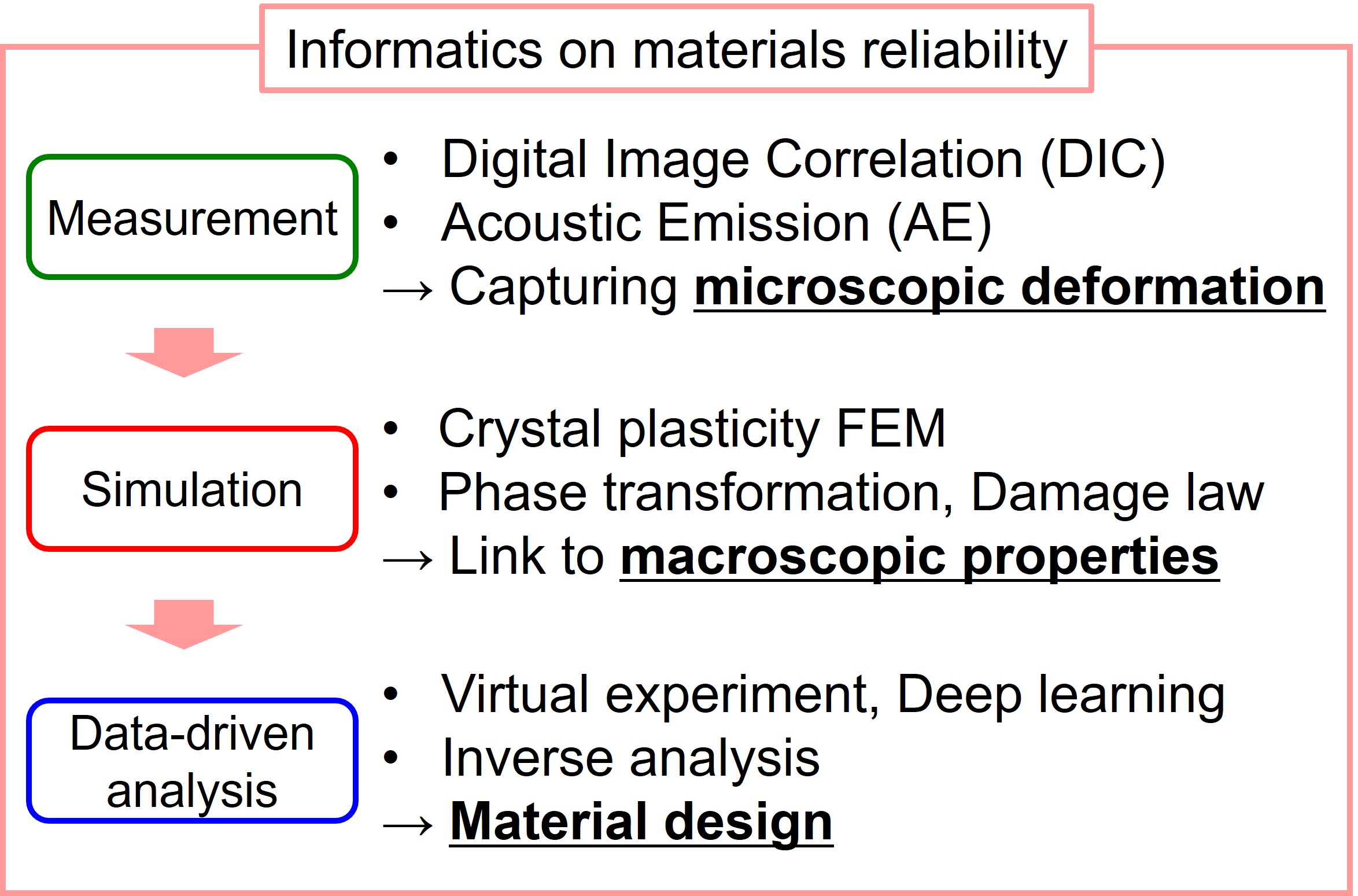
We combine measurement, numerical analysis, and data-driven analysis to develop high-reliability materials. First, we use multiple measurement techniques to quantitatively capture deformation and fracture phenomena at the microstructural scale, then construct numerical models that replicate real physical behaviors based on these observations. Next, by running virtual experiments on various microstructural materials and accumulating “microstructure–microfracture–property” data, we apply machine learning and optimization algorithms to conduct so-called “inverse problem analysis”—systematically searching for microstructures that enhance reliability.
Analyzing Structure–Property Linkages in Materials via Data Science
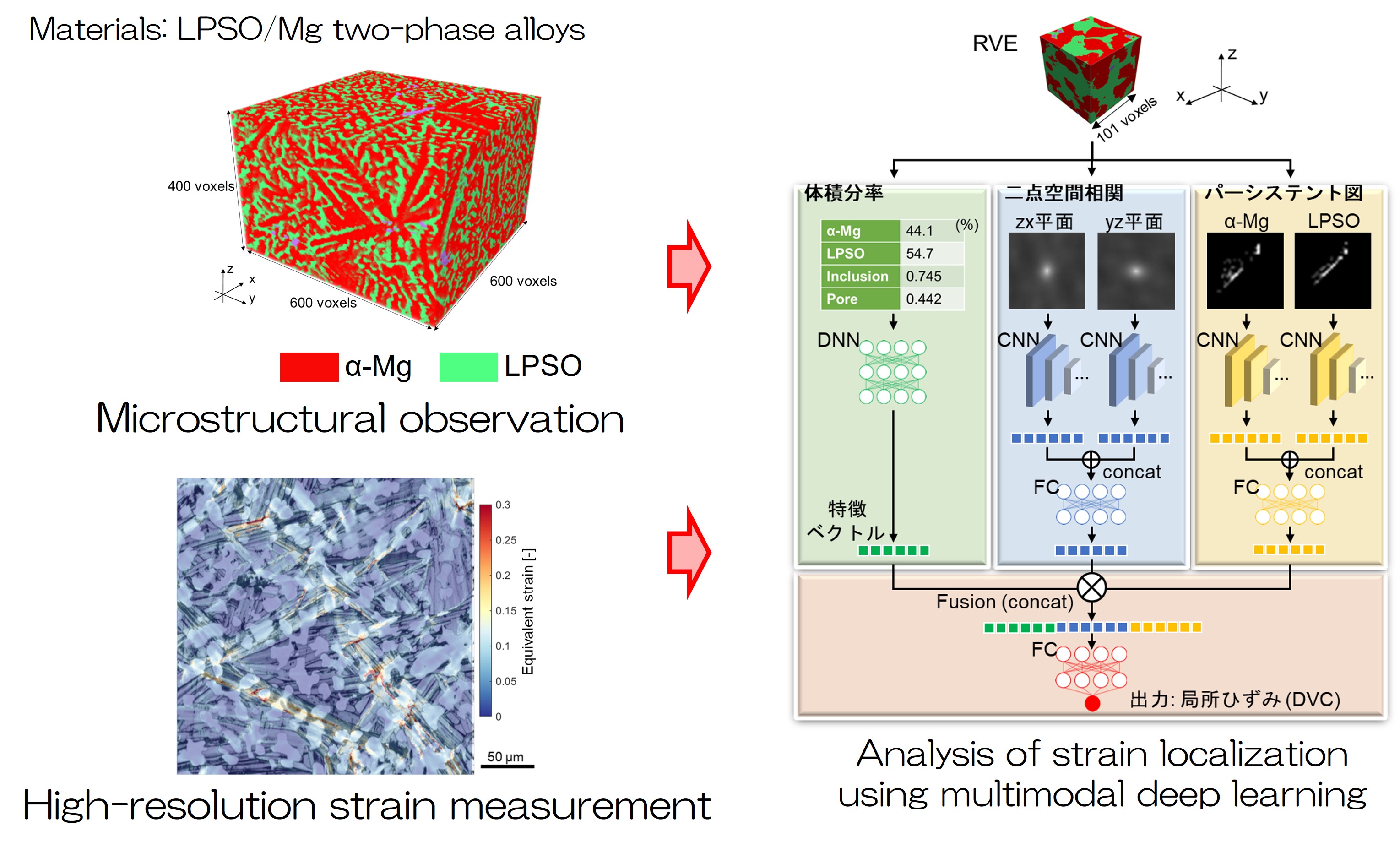
We collect extensive data linking microstructure and mechanical properties by combining 3D strain measurements using X-ray CT with crystal plasticity finite element methods (CPFEM).
Machine learning and Bayesian optimization further enable us to accurately predict material properties from microstructure.
Through inverse problem analysis, we aim to discover microstructures that overcome property trade-offs and accelerate the development of next-generation materials.
[1] Acta Materialia (2024) 281 120398
[2] Acta Materialia (2024) 281 120422
[3] Science and Technology of Advanced Materials: Methods 2 (2022) 175-197
[4] Materials Today Communications 33 (2022) 104958
Enhancing the Reliability of Metal Additive Manufacturing (3D Printing)
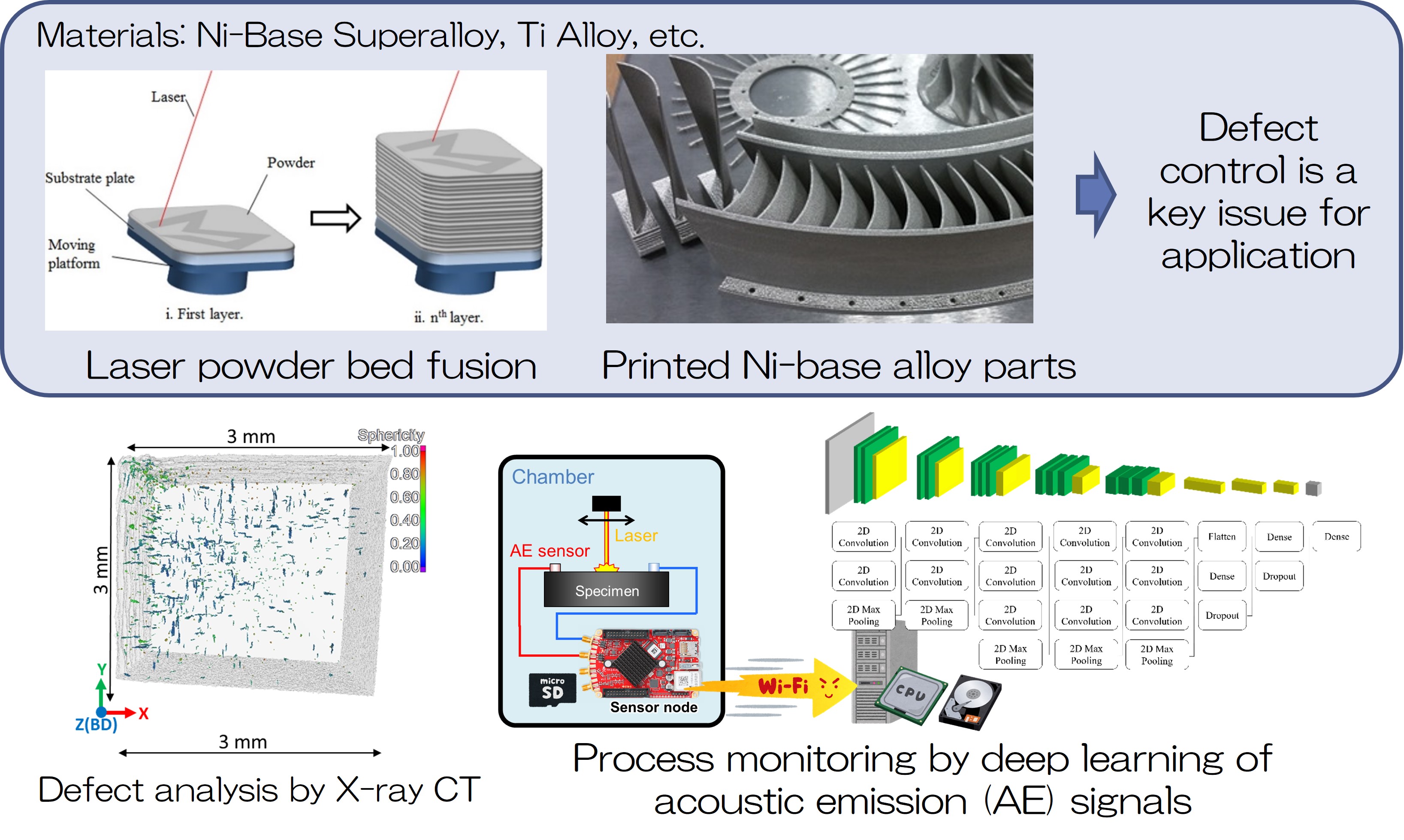
In metal 3D printing, rapid cycles of melting and solidification produce complex defects and microstructures.
We are investigating real-time defect detection by measuring “sound” from the build process via acoustic emission (AE) and analyzing it using deep learning.
Additionally, crystal plasticity finite element analysis that accounts for defect geometry allows us to predict mechanical properties—such as
strength, ductility, and fatigue—with high precision, ultimately aiming to significantly improve the reliability of additively manufactured parts.
[1] Engineering Failure Analysis 174 (2025), 109534
[2] International Journal of Fatigue 182 (2024) 108203
[3] Acta Materialia 177 (2019) 56-67
Elucidating Fatigue Mechanisms in Aircraft Materials
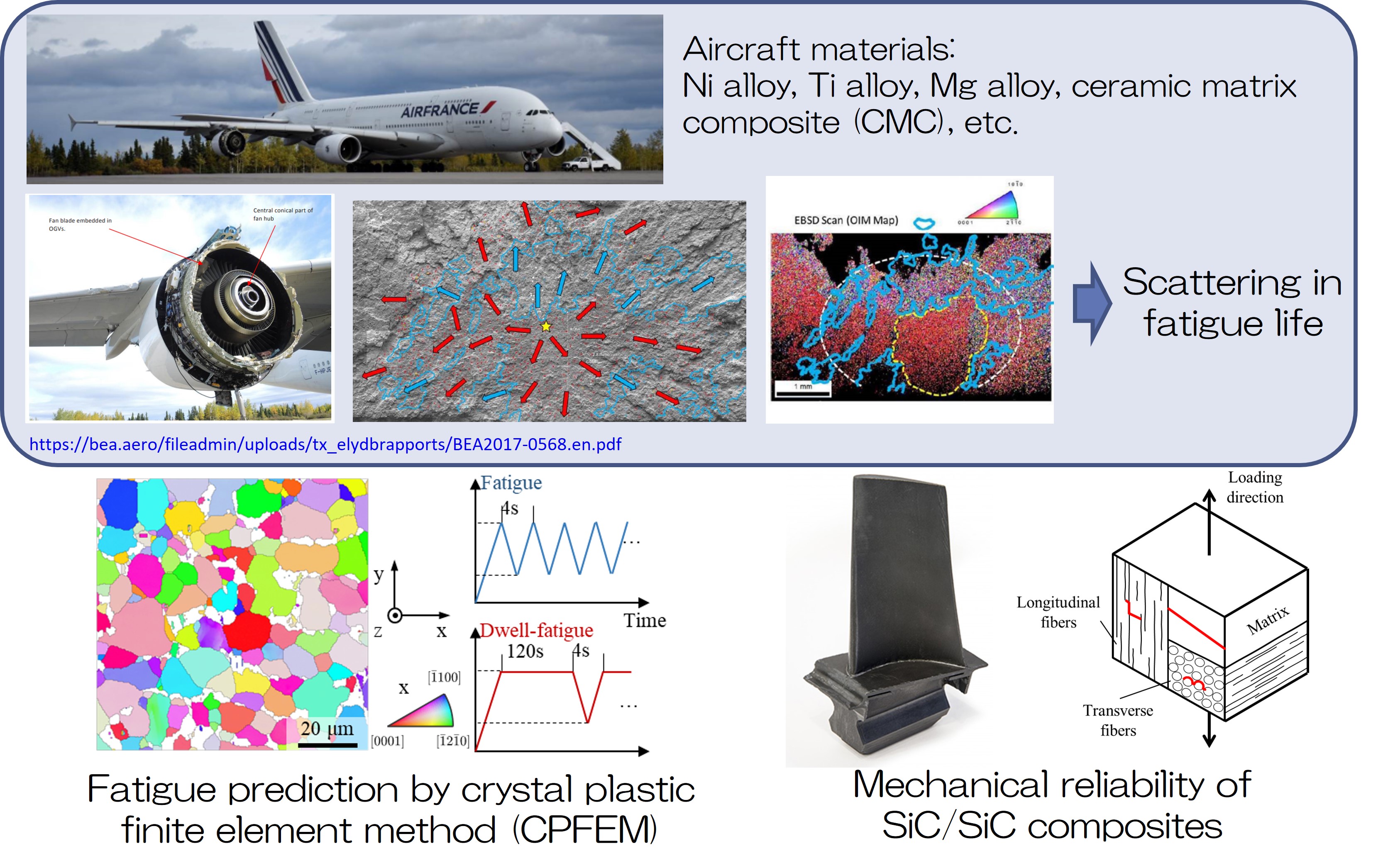
Aircraft materials demand exceptional fatigue durability.
We employ high-resolution digital image correlation (HR-DIC) and AE measurements to track crack initiation and propagation at the microstructural scale.
Integrating these findings with numerical simulations helps us establish guidelines for materials design that achieves both lightweight structures and high reliability.
[1] International Journal of Plasticity 166 (2023) 103618
[2] Journal of the European Ceramic Society 40 (2020) 2791-2800
[3] Engineering Fracture Mechanics 198 (2018) 158-170
Analyzing Corrosion Behavior in Automotive Materials
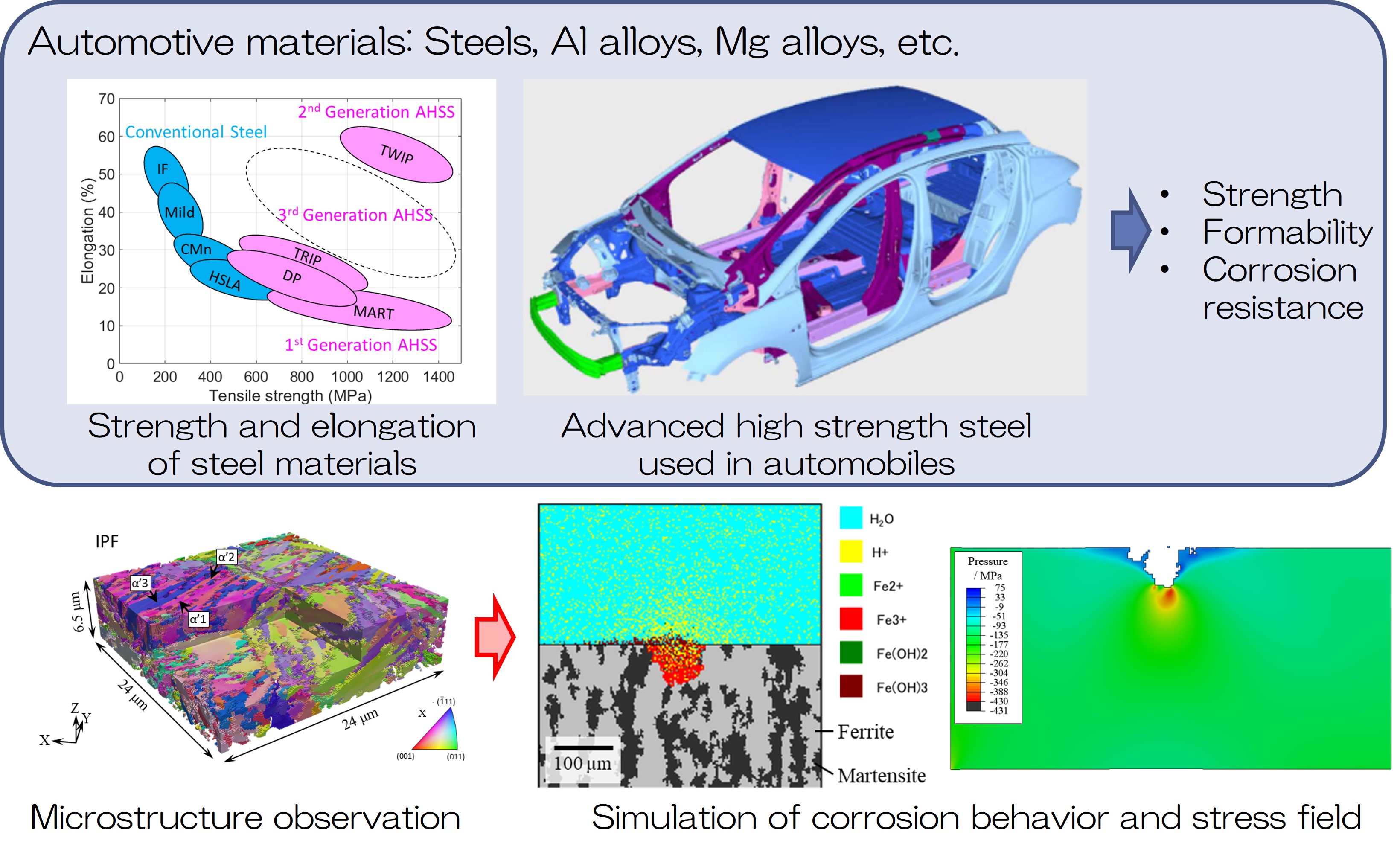
Corrosion-induced degradation poses a major challenge for automotive materials.
For aluminum alloys and high-strength steels, we analyze localized microstructural changes and pit formation under corrosive conditions using AE sensors and high-speed cameras.
We also integrate the cellular automaton (CA) method with finite element methods (FEM) to develop a micro-fracture prediction model that accounts for both corrosion and stress fields.
These efforts aim to establish design guidelines that balance durability and lightweight performance.
[1] Corrosion Science 240 (2024) 112429
[2] International Journal of Plasticity 170 (2023) 103762
[3] Materials and Design 190 (2020) 108573
Elucidating the Mechanical Properties of Nanolaminated Metallic Materials
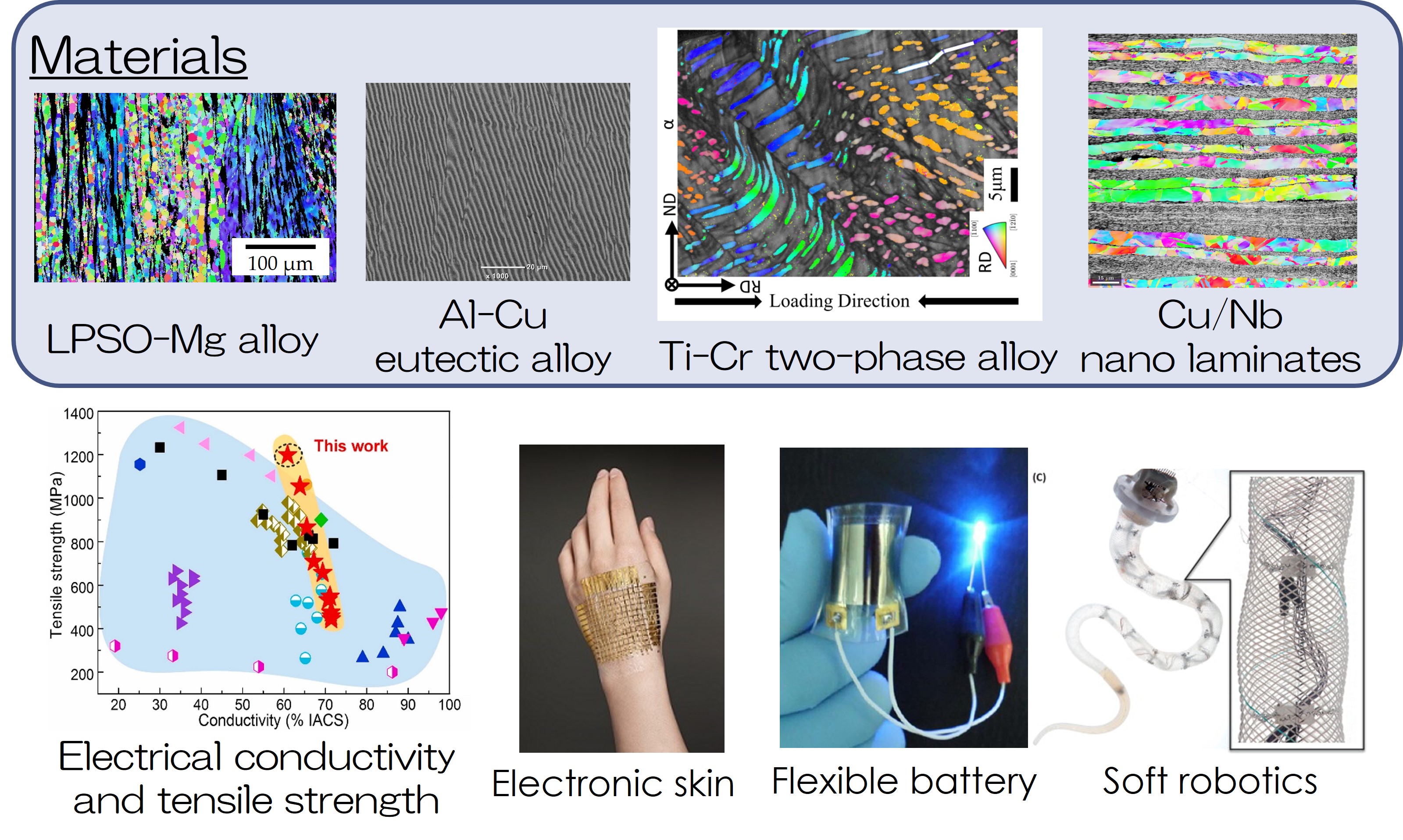
Nanolaminated metals can potentially achieve simultaneously high strength and high electrical conductivity, or high strength and high toughness—combinations traditionally considered difficult to reconcile.
To explore this, we fabricate various nanolaminated metals and use electron microscopy along with multiscale simulations to analyze interfacial structures and micro-fracture behavior.
With future applications in electronic skin, flexible batteries, and soft robotics in mind, we are driving innovations in new material development.
[1] International Journal of Fatigue 193 (2025) 108772
[2] Materials Transactions 65 (2024) 677-686
[3] Materials Transactions 65 (2024) 167-176
Poster
